
 KM
KM EUR
EUR USD
USD GBP
GBP AUD
AUD CAD
CAD NZD
NZD CHF
CHF SEK
SEK NOK
NOK DKK
DKK PLN
PLN CZK
CZK HUF
HUF RON
RON RSD
RSD TRY
TRY ILS
ILS AED
AED JPY
JPY KRW
KRW CNY
CNY SGD
SGD INR
INR BRL
BRL MXN
MXN ZAR
ZAR
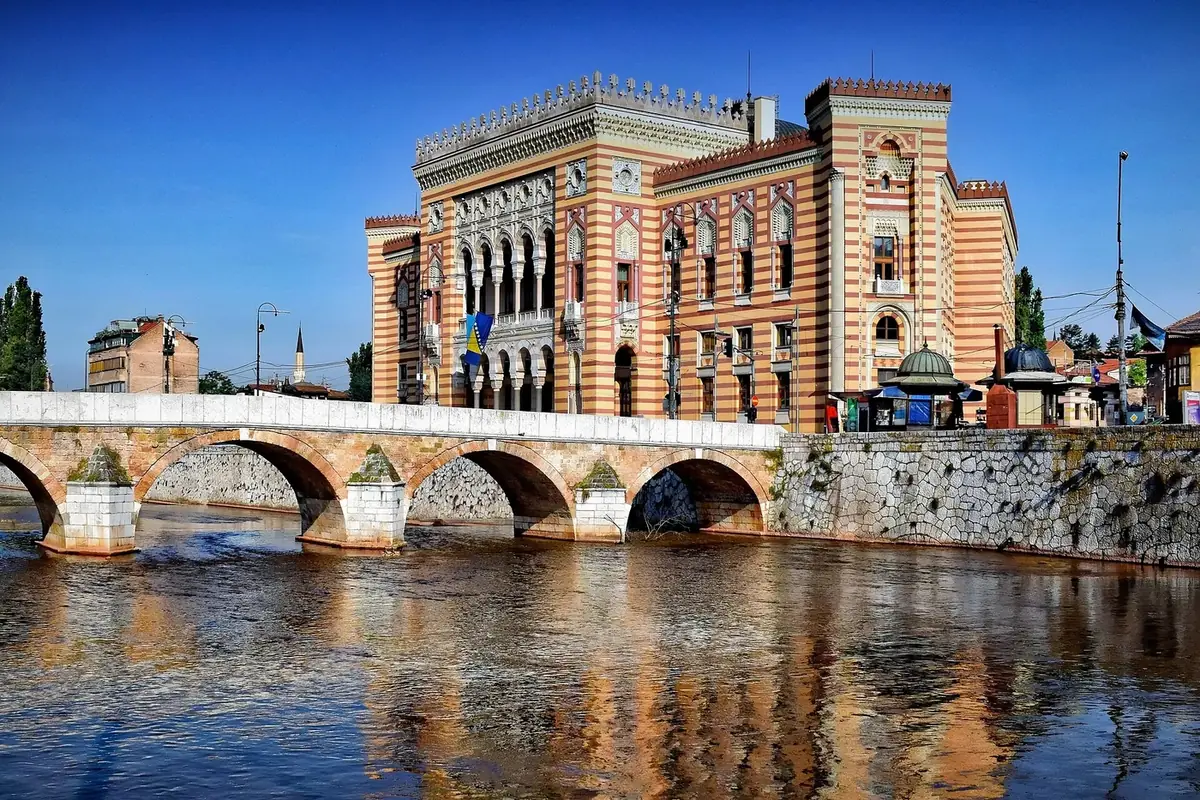
The top things to do in Sarajevo are a walk around Baščaršija, the Old Town, a stop on the Latin Bridge where the First World War began, a look inside City Hall, and a cable car ride up Trebević for the view. Add the Tunnel of Hope, a plate of ćevapi and a day trip to Mostar, and two or three days fill up fast.
We are a small hostel above the Old Town, and this is what we tell guests is worth their time. Below is a quick table, then a short section on each sight with when it opens.
Sarajevo attractions at a glance
| Sight | Area | Time to spend |
|---|---|---|
| Baščaršija and the Sebilj | Old Town | 2 to 3 hours |
| Latin Bridge | Old Town, by the river | 15 minutes |
| Museum Sarajevo 1878 to 1918 | Corner of the Latin Bridge | 30 to 45 minutes |
| Vijećnica (City Hall) | Old Town, by the river | 1 hour |
| Gazi Husrev-beg Mosque | Old Town | 30 minutes |
| Trebević cable car | Up the mountain | 2 to 3 hours |
| Tunnel of Hope | Butmir, by the airport | Half a day with travel |
| War Childhood Museum | Logavina, Old Town | 1 to 1.5 hours |
| Free walking tour | Starts at the National Theatre | 2 hours |
What is there to do in Sarajevo's Old Town?
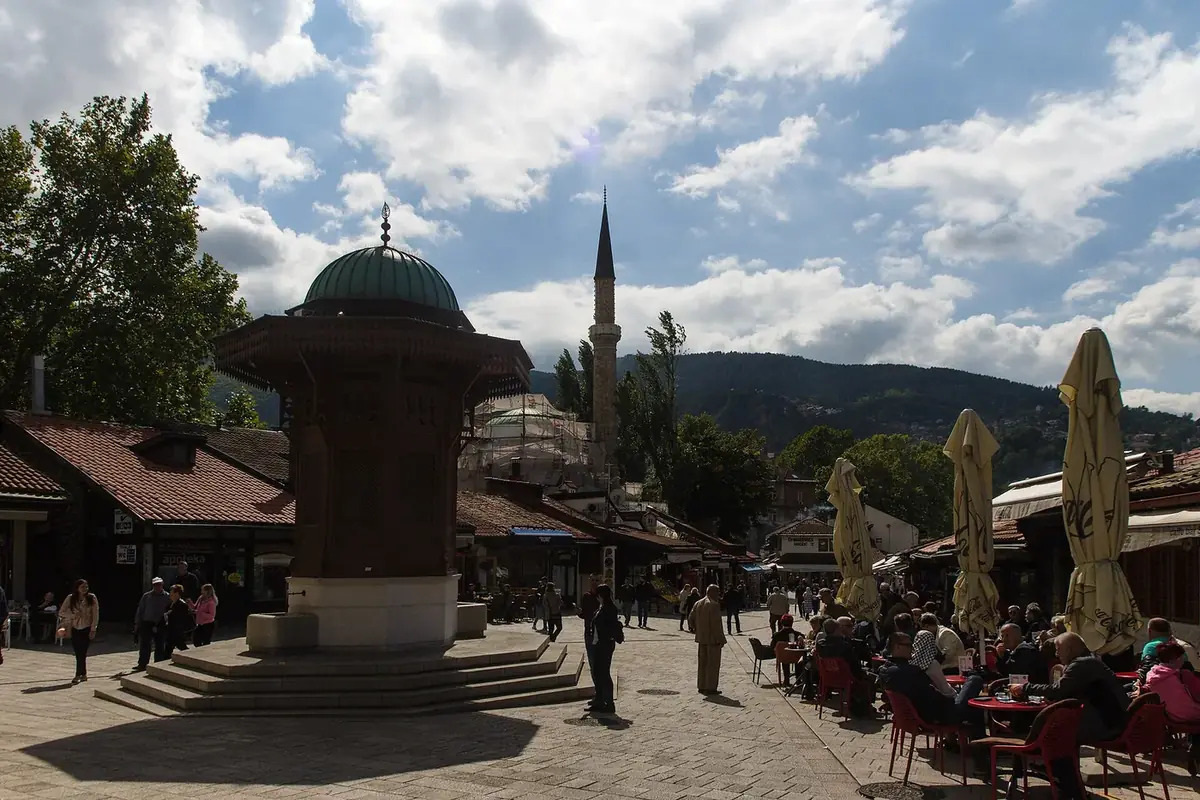
Walk it. Baščaršija is the old market quarter, and it is where most first days in Sarajevo start. The city's tourist board says it was set up in the 15th century by Isa-beg Isaković, the founder of Sarajevo, and by Gazi Husrev-beg, who left the city a string of mosques, schools and inns.
The centre is the square with the Sebilj, a wooden fountain built in 1753. Local legend says anyone who drinks from Sarajevo's fountains will come back. Around it run small streets named after old crafts: Kazandžiluk for the coppersmiths, Kujundžiluk for the jewellers, and Bravadžiluk, which is now lined with places to eat.
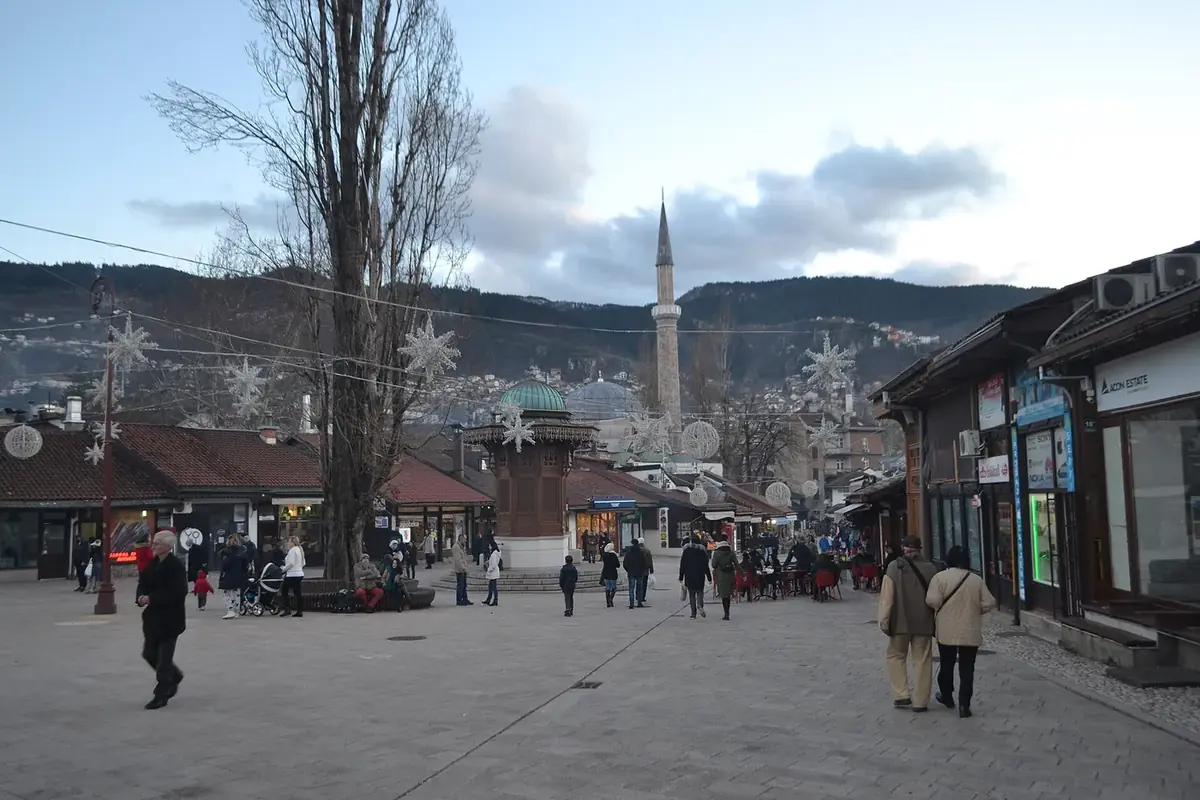
Give it a morning, then come back after dark, when it feels like a different place. Our full guide to Baščaršija and the Old Town covers the mosque, the bazaars and the best route through it.
Where did the First World War start?
On the corner by the Latin Bridge. On 28 June 1914, Gavrilo Princip shot Archduke Franz Ferdinand, heir to the Austro-Hungarian throne, and his wife Sophie on the corner by the bridge, where Obala Kulina bana meets Zelenih beretki. Austria-Hungary said Serbia was involved and sent it an ultimatum on 23 July 1914. The First World War began soon after.
The bridge itself is a small stone bridge over the Miljacka river, with round holes in its sides. It is free to cross and look at.
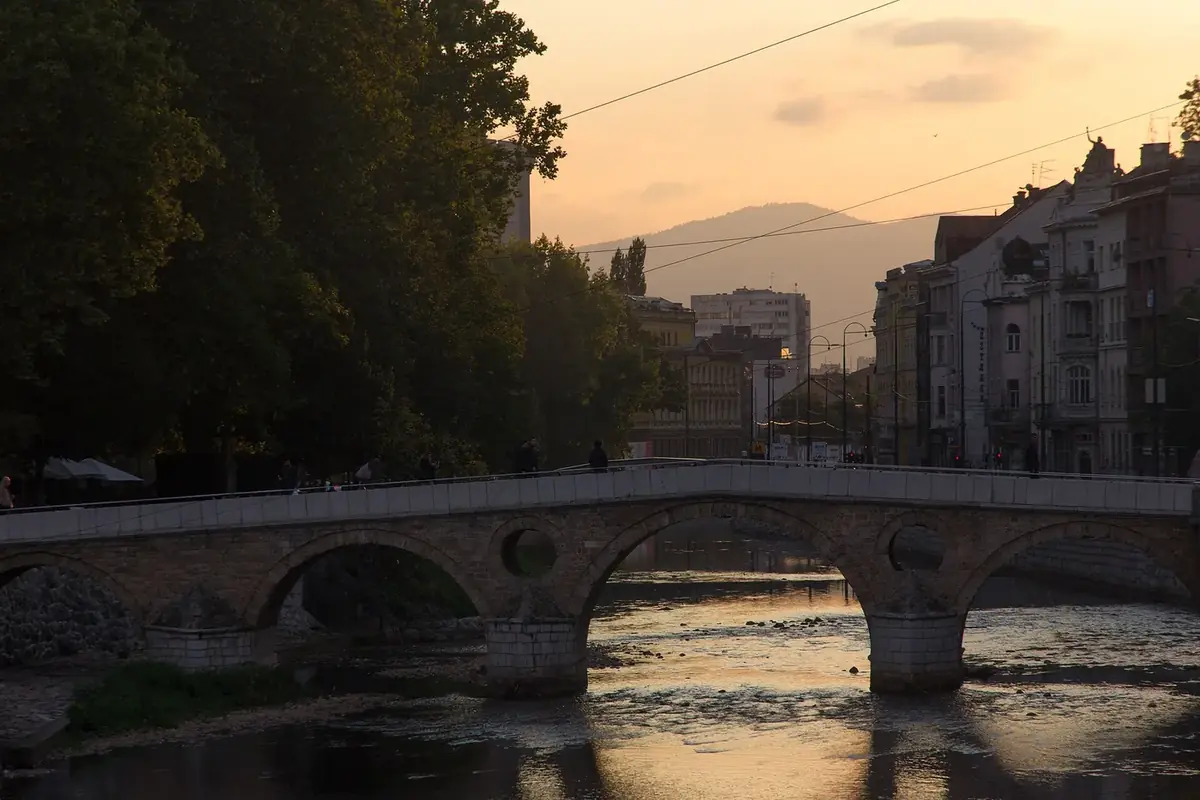
On that same corner is the Museum Sarajevo 1878 to 1918, run by the Museum of Sarajevo. It tells the story of the city under Austro-Hungarian rule, and it keeps parts of the old monument to Franz Ferdinand and Sophie. A set of Princip's footprints, made by the painter Vojo Dimitrijević, sits in front of it. We could not confirm its opening hours online, so ask at the door.
Is Sarajevo City Hall worth visiting?
Yes. Vijećnica, the City Hall, is the striped building on the riverside road, built in a pseudo-Moorish style by the architect Alexander Wittek. It opened on 20 April 1896, during Austro-Hungarian rule, and became the National Library after the Second World War.
On the night of 25 to 26 August 1992, during the siege, it was set on fire by shelling. The fire destroyed the building and about 2 million books and papers. It was rebuilt from the original plans between 1996 and 2014, and it reopened on 9 May 2014.
Inside, you can walk through the main hall and the exhibition. It opens every day from 9:00 to 17:00, except during events. The hours are on the City Hall's own website.
Can you go inside the Gazi Husrev-beg Mosque?
Yes, outside prayer times. The mosque was built in 1530 by Gazi Husrev-beg, and it sits right in the Old Town, with a clock tower about 30 metres tall beside it.
The mosque's own website says visits inside come with an English-speaking guide. From 1 April to 31 October, visits run from 9:00 to 12:00, 14:30 to 16:00 and 17:30 to 19:00. From November to March, the inside is open daily from 9:00 to 11:00 only.
The courtyard is a calm place to sit even if you do not go in.
Why is Sarajevo called the Jerusalem of Europe?
Because a mosque, a synagogue, a Catholic church and an Orthodox church all stand within a short walk of each other. The city's tourist board calls it "European Jerusalem".
On Ferhadija street you will find a line set into the pavement with the words "Sarajevo Meeting of Cultures". It marks where the Ottoman Old Town meets the newer Austro-Hungarian city. It is a fun photo stop, and it is free.
Close by are a few small places worth an hour:
- The Museum of the Jews of Bosnia and Herzegovina, inside the oldest synagogue in the country, built in 1581.
- The Old Orthodox Church, one of the oldest religious buildings in the city.
- Svrzo's House, an old family home that shows how a Sarajevo Muslim family lived in the late 18th and 19th centuries.
How do you get up Trebević, the mountain above Sarajevo?
Take the Trebević cable car. It first opened on 3 May 1959, and today it lifts you from the city to the mountain in small cabins. At the top you get forest paths, fresh air and wide views back over the valley.
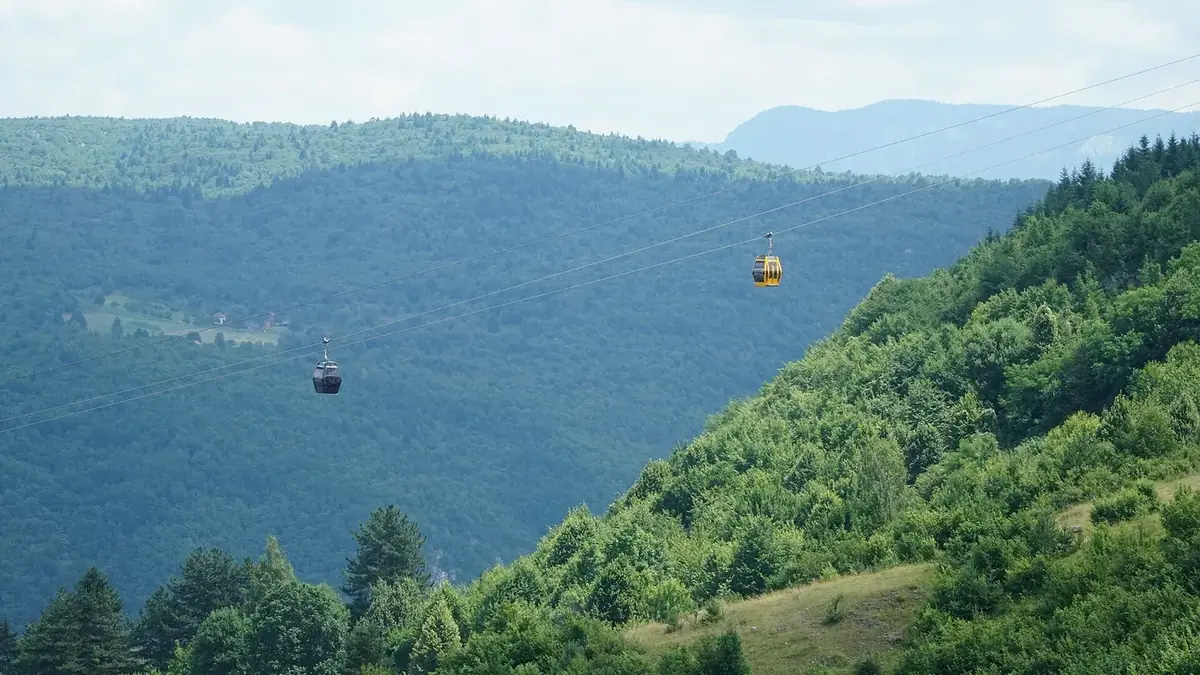
The Sarajevo cable car website says it runs Monday 12:00 to 19:00 and every other day 9:00 to 19:00. A ticket is only valid on the day you buy it.
Up on Trebević is the bobsleigh track from the 1984 Winter Olympics. It was wrecked in the war and is now covered in graffiti. Our guide to the best viewpoints in Sarajevo has more on the mountain, plus a safety note on staying on the paths.
Where is the best view of Sarajevo?
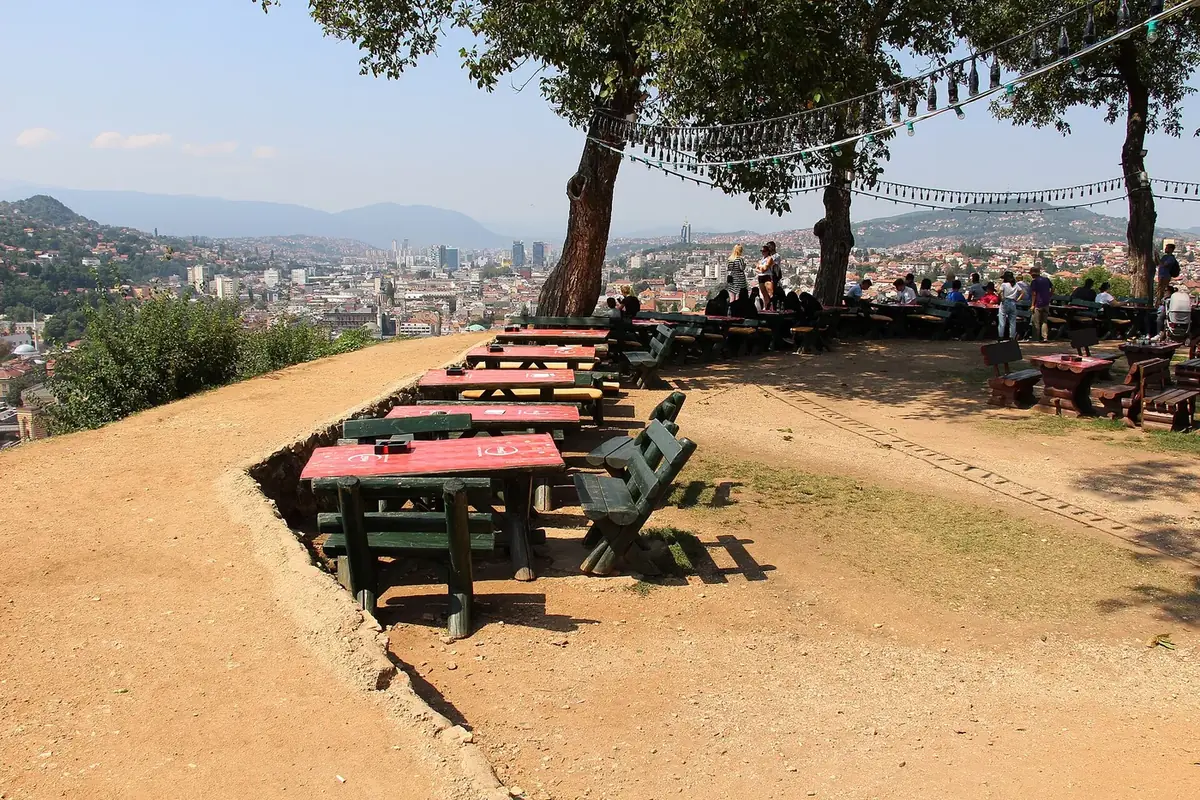
Try the Yellow Fortress, Žuta tabija, on the hill above the Old Town. It is an uphill walk from Baščaršija, and the whole city spreads out below you. During Ramadan, a cannon is fired from here to mark the end of the day's fast.
On the same hill is the White Fortress, Bijela tabija, which the tourist board says has one of the finest views of the city. Trebević, by cable car, gives you the view from the other side of the valley.
We also have a terrace with a view over the city, which is a nice place to end the day without another climb. The full list, with sunset tips, is in our Sarajevo viewpoints guide.
Where can you learn about the siege of Sarajevo?
Start with the Tunnel of Hope, then the War Childhood Museum. The siege of Sarajevo ran from 1992 to 1995, and it shaped the city you see today. Both places tell that story with care.
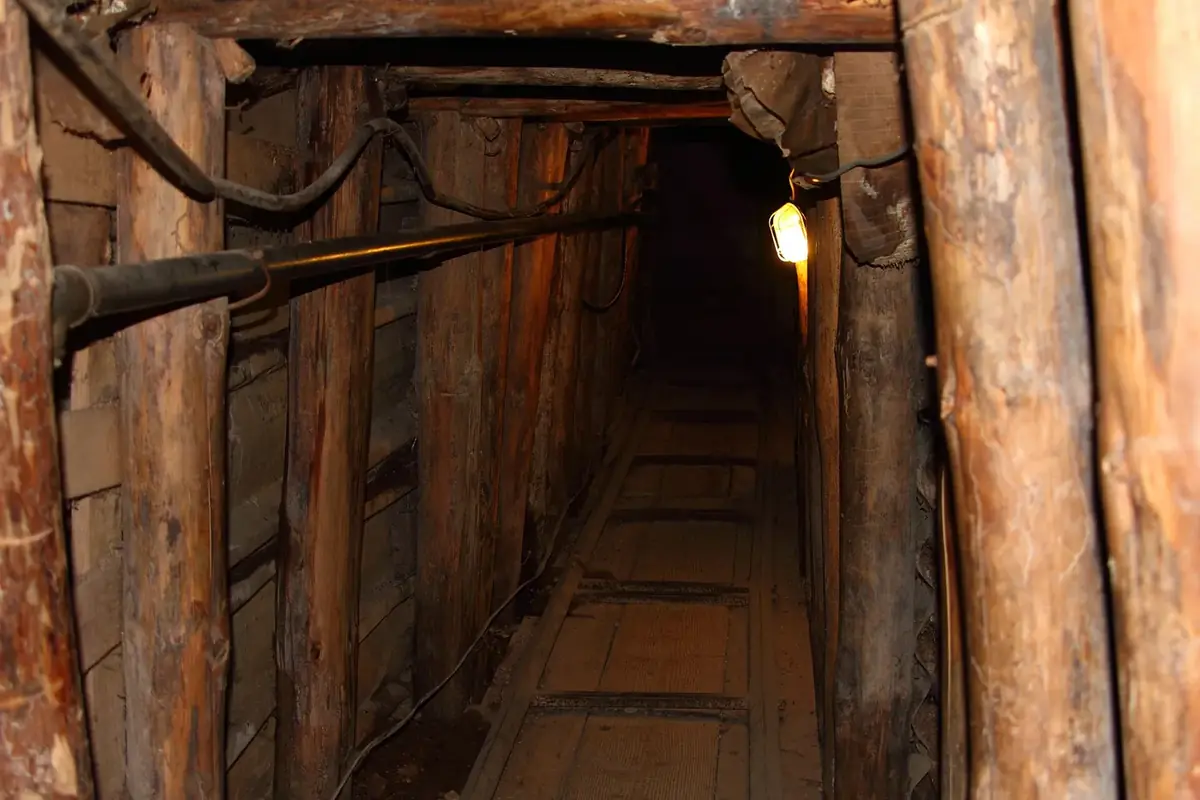
The Tunnel of Hope was dug under the airport runway between 27 March and 30 July 1993. It was 800 metres long, 1 metre wide and 1.6 metres high, and the tourist board says it was the city's only link to the outside. You can visit the Butmir end, with a museum, the original entrance and a stretch of the tunnel. It is run by the Memorial Centre Sarajevo. They take cash in KM only, no cards. KM is the Bosnian convertible mark. From April to October it opens 8:30 to 17:00, last entry 16:30. From November to March, 9:00 to 16:00, last entry 15:30.
The War Childhood Museum on Logavina street shows what growing up in the war was like, through objects and stories given by people who were children then. It opens every day from 11:00 to 19:00, last entry 18:30.
As you walk around, look down. Red marks on the pavement, called Sarajevo Roses, fill the scars left by shells where people were killed. Please do not stand on them for photos.
Our guide to the Tunnel of Hope and Sarajevo's war museums covers how to get there and what else to see.
What should you eat in Sarajevo?
Ćevapi first, the grilled meat dish Sarajevo is known for. Bravadžiluk street in the Old Town is lined with places that make them, along with pita (pies) and ašćinica, the old-style canteens.
Then sit down for a coffee and take your time. The tourist board puts it well: coffee here is drunk with "merak", slow pleasure, or not at all.
For where to go and what to order, read our guide to restaurants and ćevapi in Sarajevo.
What are the free things to do in Sarajevo?
Plenty. A lot of the best things to do in Sarajevo are free:
- Walk Baščaršija and see the Sebilj fountain.
- Find the "Sarajevo Meeting of Cultures" line on Ferhadija street.
- Stand on the Latin Bridge and the corner where the 1914 shooting happened.
- Sit in the courtyard of the Gazi Husrev-beg Mosque.
- Look for the Sarajevo Roses on the pavements.
- Walk up the hill to the Yellow Fortress for the view.
- Join the free walking tour (below).
Is there a free walking tour in Sarajevo?
Yes. The guides we recommend are Neno and Friends, licensed local guides. Their East meets West tour takes about 2 hours and covers the Latin Bridge, the Old Town and City Hall. It runs on tips, so you pay what you think it is worth. Book ahead on WhatsApp or by email. It is a good way to get your bearings on the first morning.
If you want to go deeper into the war years, Meet Bosnia also runs the Fall of Yugoslavia, Sarajevo Siege Tour. It takes about 4 hours.
To book a Meet Bosnia tour, scan the code at our reception, or book on their site.
What day trips can you do from Sarajevo?
Mostar, with its Old Bridge, is the day trip we get asked about most. Our Sarajevo to Mostar guide covers the bus, the train and the tours. Meet Bosnia runs a full-day guided Mostar tour.
Closer to town, Vrelo Bosne is the spring of the river Bosna, at the foot of Mount Igman. You reach it along a 3 km alley of plane and chestnut trees from Ilidža, planted in 1894. It is a favourite spot for locals on a sunny day.
For mountains, Lukomir is a high village about 42 km from Sarajevo, known for its old stone houses with shingle roofs. Meet Bosnia runs a Lukomir hiking tour of about 8 hours.
You can book Meet Bosnia's day trips at our reception, and they can pick you up in front of the hostel.
Things to do in Sarajevo in two or three days
Not sure what to do in Sarajevo with only a few days? Here is a simple plan.
- Day one: the free walking tour in the morning, then Baščaršija, the Latin Bridge and City Hall. Ćevapi for dinner, then the Yellow Fortress at sunset.
- Day two: the Tunnel of Hope in the morning, then the War Childhood Museum in the afternoon. Cable car up Trebević before it closes.
- Day three: a day trip to Mostar, or Vrelo Bosne if you want a slow day.
Got only one day? Do day one, and swap the Yellow Fortress for the cable car if the weather is clear.
Where should you stay to see Sarajevo?
Close to the Old Town, so you can walk to most of the sights. Hostel Kucha is 19 minutes' walk downhill to Baščaršija and 12 minutes to the Cathedral. The walk back up is uphill. The easy way is the tram to Skenderija, then up through Veliki Park and Džidžikovac street, or bus 72 to Studentski Dom, the stop 1 minute from our door.
Arriving by plane? Our airport shuttle runs both ways and takes up to 3 people. You pay at reception. Our airport to Old Town guide has the details. For the different areas of the city, see where to stay in Sarajevo, and if you have questions about safety, read is Sarajevo safe?
Book a bed direct on this site and you pay no booking fees. See our dorms and private rooms.
Quick answers
- What are the top things to do in Sarajevo, Bosnia? Baščaršija, the Latin Bridge, City Hall, the Trebević cable car and the Tunnel of Hope.
- How many days do you need in Sarajevo? Two to three days covers the main sights, plus one more for Mostar.
- Is there a free walking tour? Yes. Neno and Friends run 2-hour tours that work on tips. Book ahead on WhatsApp or by email.
More Sarajevo guides
Sarajevo guide
Baščaršija, Sarajevo's Old Town
The bazaar, the Latin Bridge, City Hall and the streets in between, with opening hours.
Sarajevo guide
Best viewpoints in Sarajevo
The Yellow Fortress, the White Fortress and Trebević, plus cable car times and a sunset tip.
History
The Tunnel of Hope and Sarajevo's war museums
The Tunnel of Hope, the War Childhood Museum and Gallery 11/07/95: what they are and when they open.
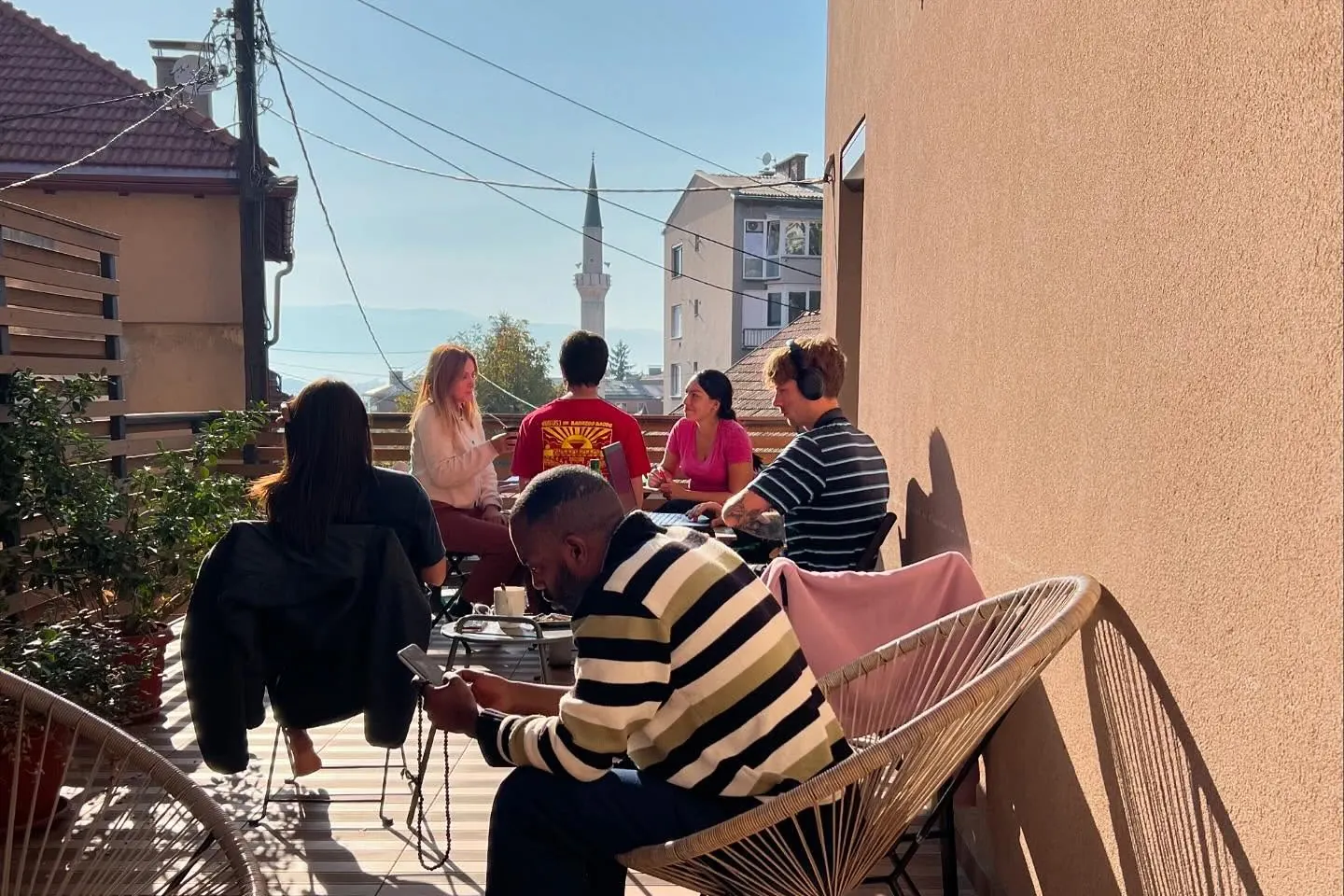
Come stay with us
Dorm beds from 33 KM a night, plus 2 KM city tax. No booking fees.
4.7 from 344 Google reviews
Questions? Chat with us on WhatsApp