
 KM
KM EUR
EUR USD
USD GBP
GBP AUD
AUD CAD
CAD NZD
NZD CHF
CHF SEK
SEK NOK
NOK DKK
DKK PLN
PLN CZK
CZK HUF
HUF RON
RON RSD
RSD TRY
TRY ILS
ILS AED
AED JPY
JPY KRW
KRW CNY
CNY SGD
SGD INR
INR BRL
BRL MXN
MXN ZAR
ZARBaščaršija, Sarajevo's Old Town
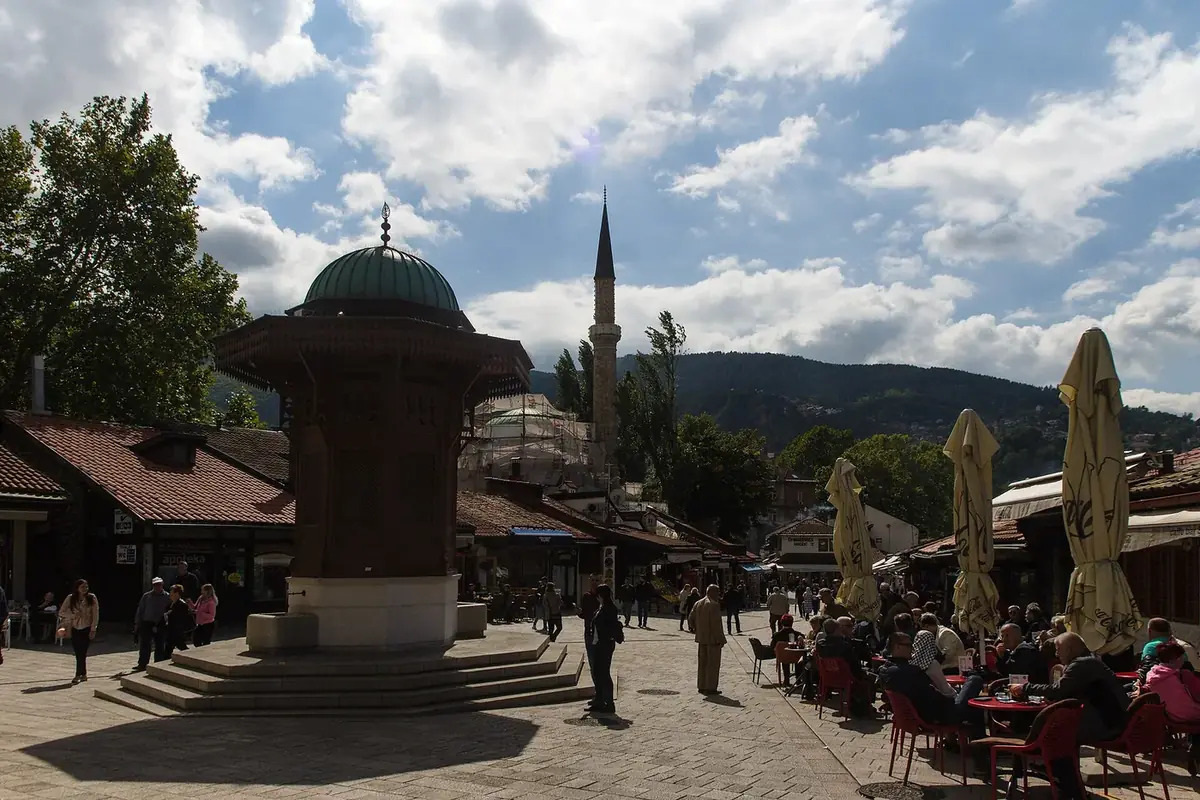
Baščaršija is Sarajevo's Old Town: the old bazaar quarter around the Sebilj fountain, where small shops, mosques, cafés and grills sit packed into a few streets. It is free to walk, and in half a day you can see the main sights, including the Latin Bridge and City Hall at its edge.
You will often see it written Bascarsija, without the marks. Either way, it is where most visits to Sarajevo begin. Here is what to see and how to get there from us.
What is Baščaršija?
It is the old market heart of Sarajevo. The name comes from Turkish and means the main market. The city's tourist board says it was set up in the 15th century by Isa-beg Isaković, the founder of Sarajevo, and by Gazi Husrev-beg, who left the city a large gift of buildings, from his mosque to a school and a library.
By the end of the 16th century the bazaar was finished. At its peak it held 45 markets and more than 80 crafts. You can still read that history in the street names: Kazandžiluk was the coppersmiths' street, Kujundžiluk the jewellers', and Sarači the leather workers'. The tourist board counts over 1,000 shops in the čaršija today.
It is a working part of town, not a museum. People shop, pray, drink coffee and meet friends here every day, so come with time to sit down.
How do you get to Baščaršija from Hostel Kucha?
Walk. Baščaršija is 19 minutes from our door on Google Maps, all downhill. The Cathedral is on the way, 12 minutes from us.
The walk back is uphill, and it takes a little longer. If your legs are tired, take the tram to Skenderija and walk up through Veliki Park and Džidžikovac street. You can also take bus 72 to Studentski Dom, the stop 1 minute from the hostel.
What is the Sebilj?
The Sebilj is the wooden fountain in the middle of the main square, and the tourist board calls it a symbol of Sarajevo. It was built in 1753.
A local legend says that whoever drinks from Sarajevo's fountains will come back to the city. The square around it is also an easy place to meet friends if you get split up.
Sarajevo had a water supply as early as the mid-15th century, and by the end of Ottoman rule there were 156 public spouts and several stone fountains, most of them built as charitable gifts to the city.
Can you visit the Gazi Husrev-beg Mosque?
Yes, outside prayer times. The mosque was built in 1530 by Gazi Husrev-beg, who governed Bosnia for the Ottomans, and it is the centre of a whole group of buildings: a clock tower about 30 metres tall, two mausoleums, and a madrasa, or school, across the street that he named after his mother.
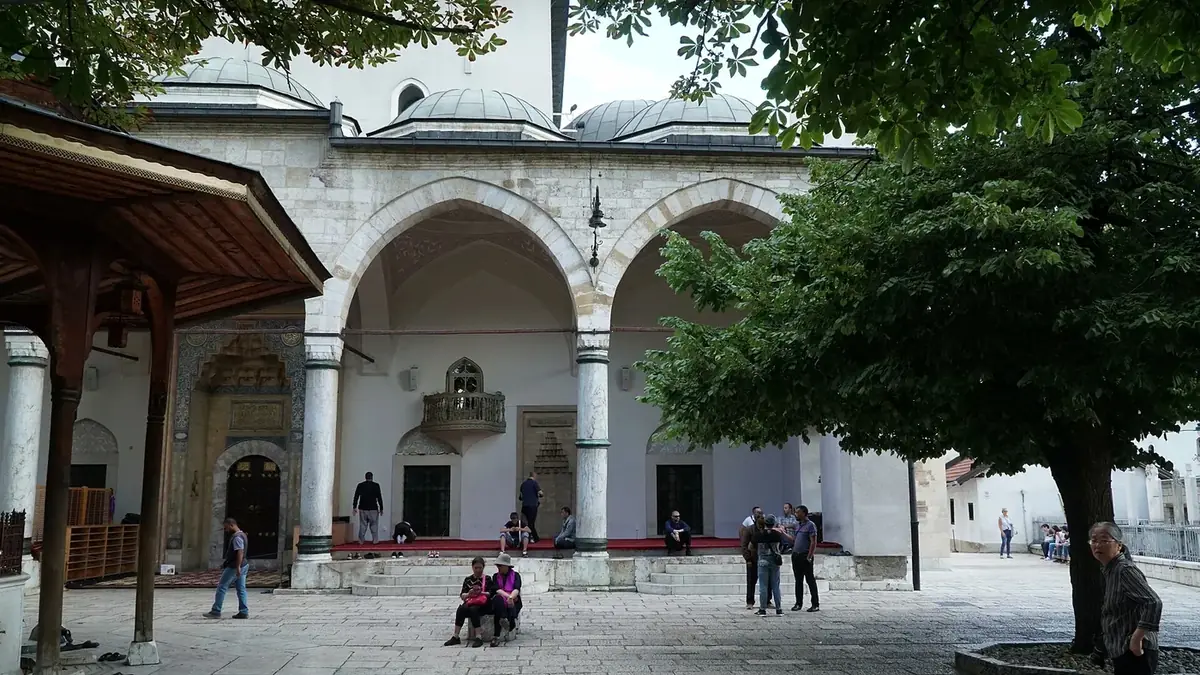
The mosque's own website says a visit inside includes an English-speaking guide. You buy the ticket at the information office in the courtyard.
- 1 April to 31 October: 9:00 to 12:00, 14:30 to 16:00 and 17:30 to 19:00.
- During Ramadan: 9:00 to 12:00 and 17:30 to 19:00.
- November to March: 9:00 to 11:00 every day.
The same waqf, or charity, runs the Gazi Husrev-beg Museum in the Kuršumli madrasa.
Where is the Sarajevo Meeting of Cultures line?
On Ferhadija street, where the old bazaar ends. A long stone strip set into the pavement reads "Sarajevo Meeting of Cultures". It marks the border between the Ottoman Old Town and the Austro-Hungarian city that grew up next to it. On one side are the low shops of the bazaar, on the other the taller buildings of the newer town.
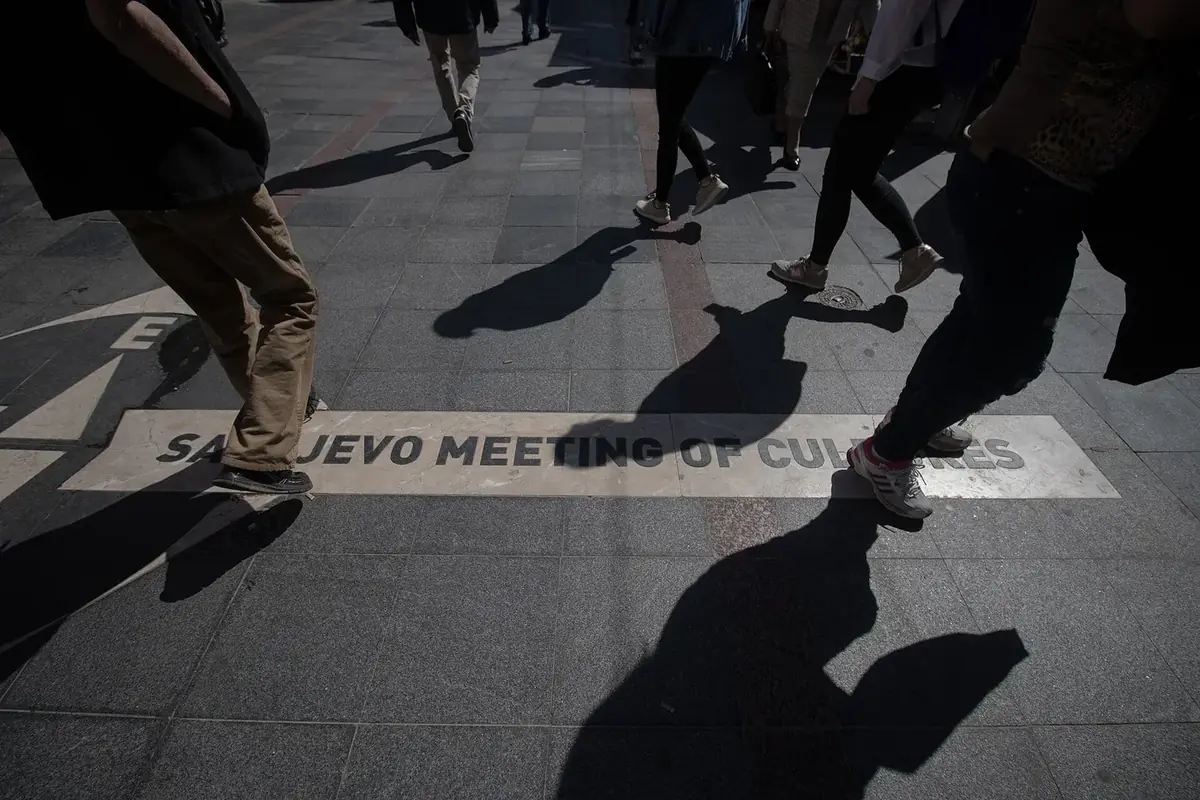
Ferhadija is a walking street, and it also carries a hard memory. On 27 May 1992, during the siege, a shell attack killed 17 people queueing for bread outside a shop here. For months afterwards, a cellist played Albinoni's Adagio at noon on the spot, in their memory.
Latin Bridge, Sarajevo: what happened there in 1914?
The First World War was set off on the corner by the Latin Bridge. On 28 June 1914, Gavrilo Princip, a high school student and member of the group Young Bosnia, shot Archduke Franz Ferdinand, heir to the Austro-Hungarian throne, and his wife Sophie. It happened where Obala Kulina bana meets Zelenih beretki, by the bridge.
Austria-Hungary said Serbia was involved and sent it an ultimatum on 23 July 1914. The war began soon after.
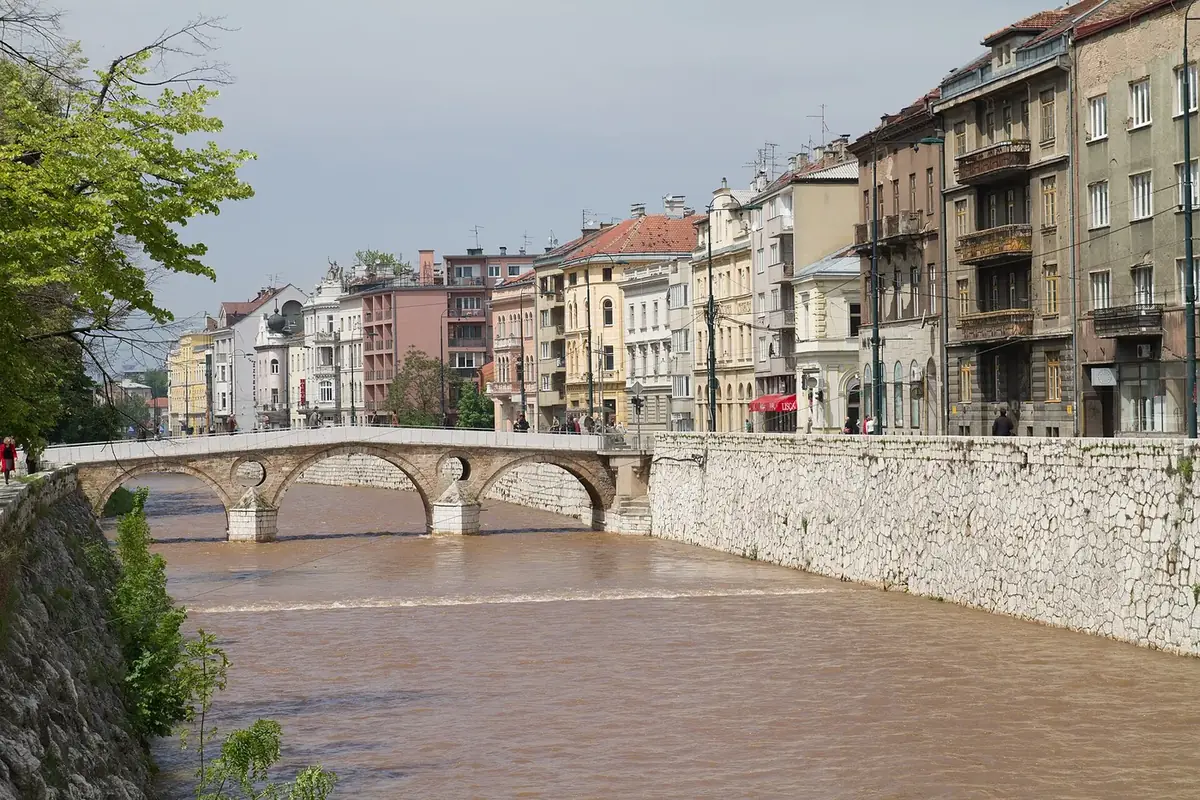
On that corner now is the Museum Sarajevo 1878 to 1918, a branch of the Museum of Sarajevo. It is in the old Schiller shop building, and the shooting happened right outside. Inside, 17 themes show life in the city under Austro-Hungarian rule. It also keeps surviving pieces of the monument that Austria-Hungary put up to Franz Ferdinand and Sophie, which was taken down after the First World War. Outside are Princip's footprints, made by the painter Vojo Dimitrijević.
The bridge is free to cross. We could not confirm the museum's opening hours online, so check at the door.
City Hall, Sarajevo: is Vijećnica worth a visit?
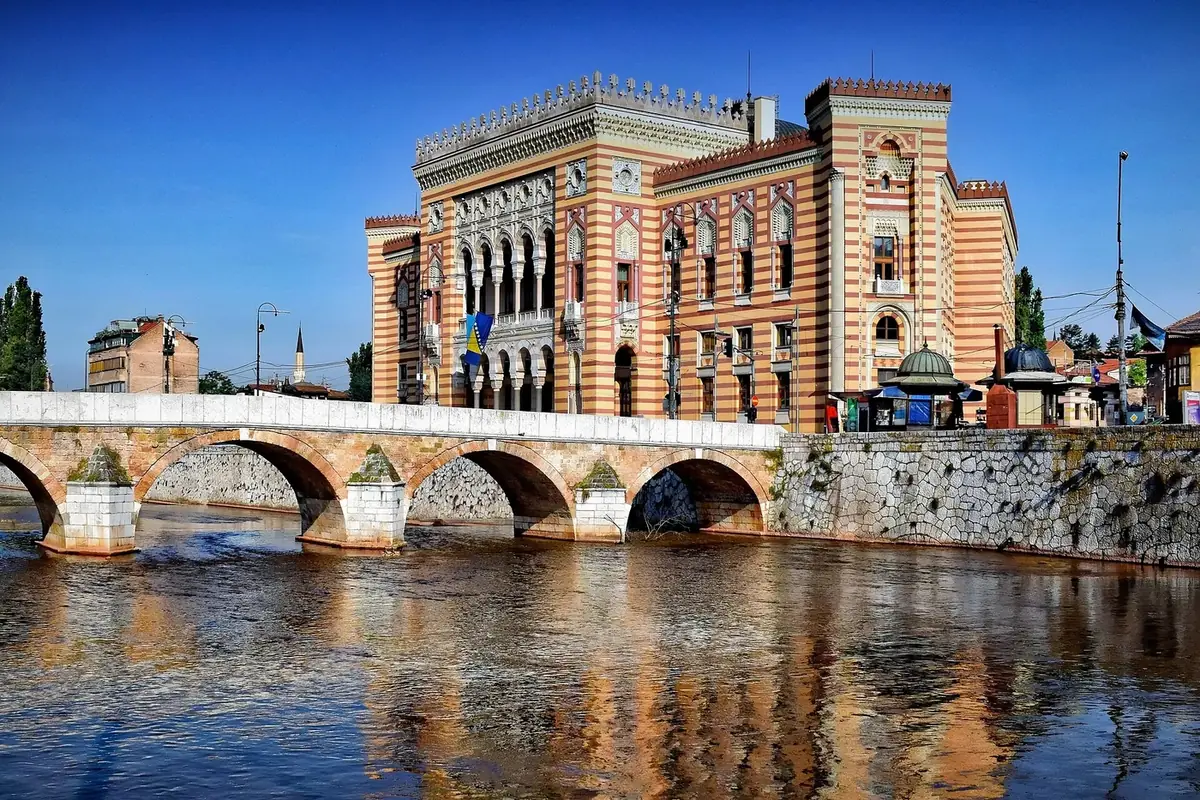
Yes. Vijećnica, Sarajevo's City Hall, is the big striped building on the river at the edge of Baščaršija. It tells the story of the city in one building, and it is a good place to spend an hour indoors if it rains.
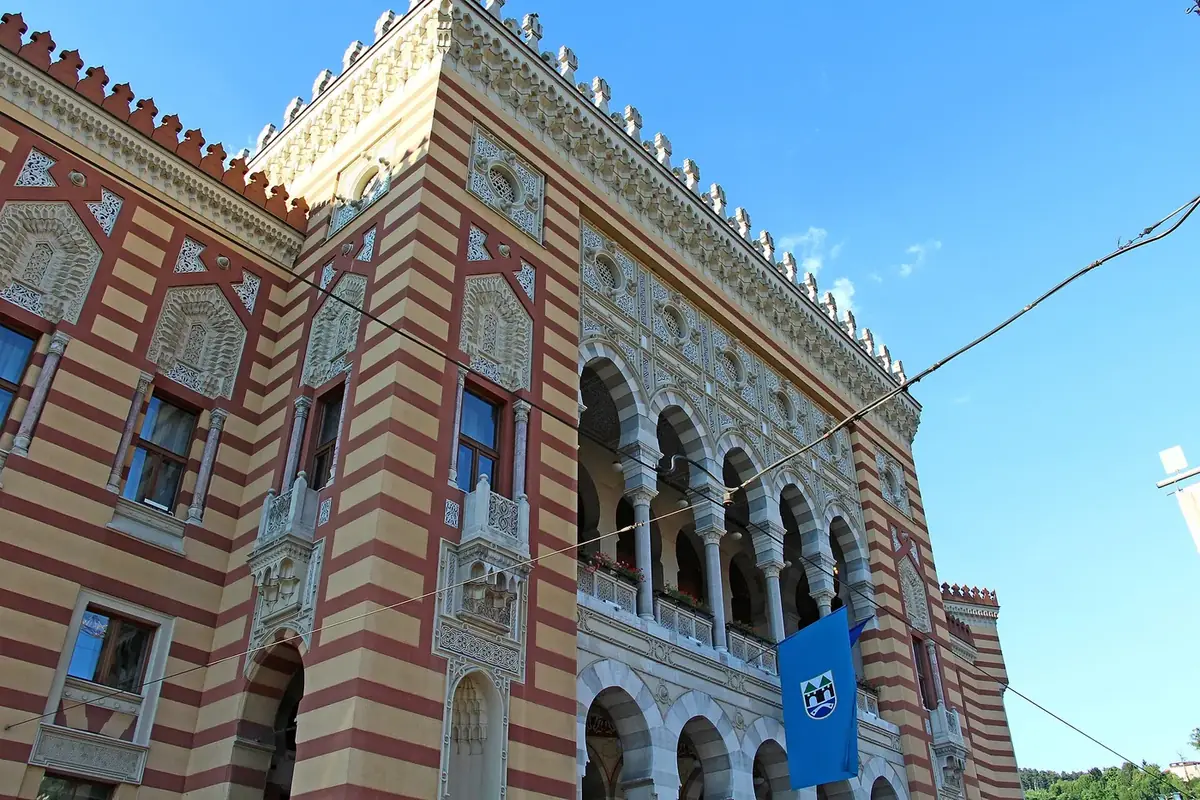
The Austro-Hungarian government built it as the city hall. The architect Alexander Wittek chose a pseudo-Moorish style, and after he died, Ćiril Iveković finished the job and added a glass dome. It opened on 20 April 1896.
On 28 June 1914, Franz Ferdinand and Sophie were received here, just minutes before they were shot. After the Second World War the building became the National Library. Then, on the night of 25 to 26 August 1992, it was set on fire by shelling. The fire destroyed the building and about 2 million books and papers.
It was rebuilt from the original plans between 1996 and 2014, and it reopened on 9 May 2014. Today it holds exhibitions, concerts and city council meetings.
The official Vijećnica website says it is open every day from 9:00 to 17:00, except during events. It is at Brodac 1.
Where should you eat in Baščaršija?
Head for Bravadžiluk. This street was once the lock makers' quarter, and now it is lined with the Old Town's best-known places for ćevapi, pita (pies) and ašćinica, the old-style canteens. Then finish with a coffee. The tourist board says coffee in Sarajevo is drunk with "merak", slow pleasure, or not at all.
Our guide to restaurants and ćevapi in Sarajevo has the details on what to order.
Is there a walking tour of Sarajevo's Old Town?
Yes, and it runs on tips. The guides we recommend are Neno and Friends, licensed local guides. Their East meets West tour takes about 2 hours and covers the Latin Bridge, the Old Town and City Hall. You pay what you think the tour is worth. Book ahead on WhatsApp or by email. A guide brings the stories behind the stones, which is hard to get from a map.
How long do you need in Baščaršija?
Half a day covers the Sebilj, the mosque, the Meeting of Cultures line, the Latin Bridge and City Hall. Add an evening, because the Old Town feels different after dark, when the grills are busy and the lights come on.
If you have more time, see our full list of things to do in Sarajevo, or climb to the Yellow Fortress above the Old Town in our viewpoints guide.
Want to stay within walking distance of the Sebilj? Book a bed direct on this site, with no booking fees. See our rooms.
Quick answers
- What is Baščaršija known for? The Sebilj fountain, the old craft streets and the Gazi Husrev-beg Mosque.
- Is Baščaršija free? Yes, the streets are free. The mosque and City Hall sell tickets to go inside.
- Where is the Latin Bridge? On the river at the edge of the Old Town, where Obala Kulina bana meets Zelenih beretki.
- When is City Hall open? Every day from 9:00 to 17:00, except during events.
More Sarajevo guides
Sarajevo guide
Things to do in Sarajevo
The Old Town, the views, the history and the free stuff, with opening hours.
Food
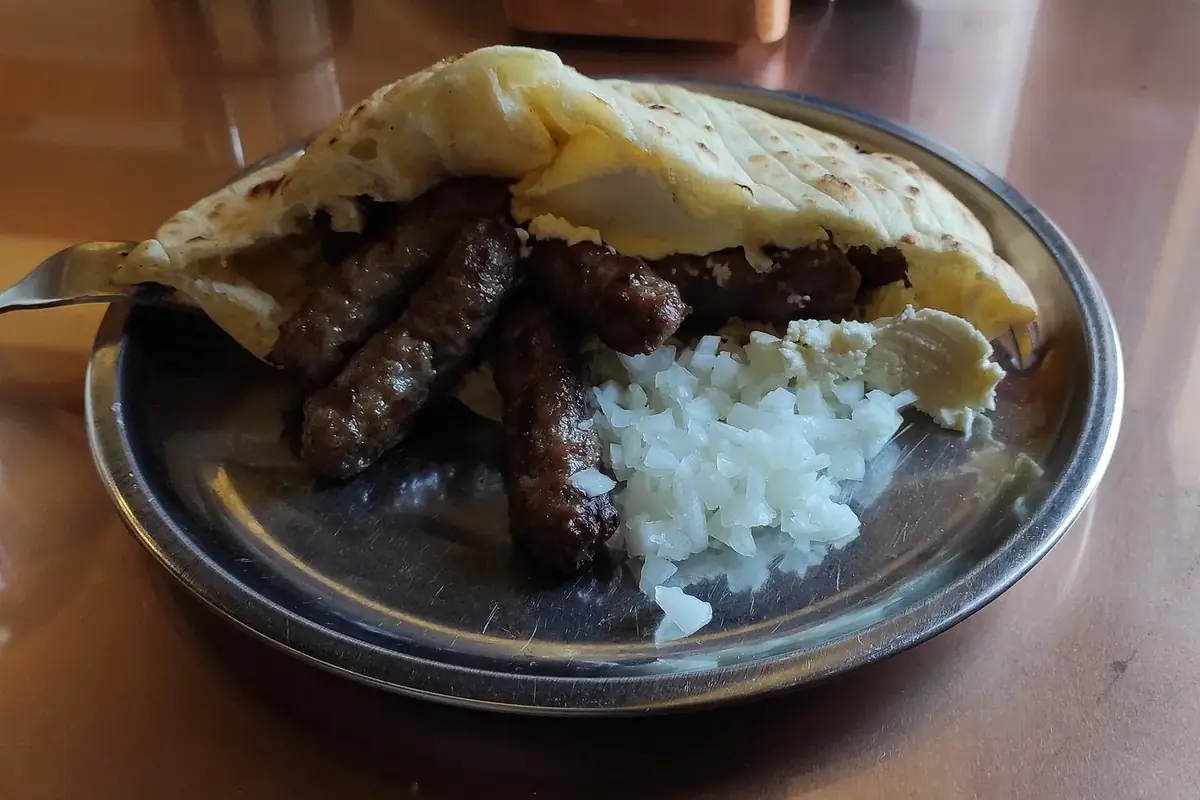
Restaurants in Sarajevo, and where to get ćevapi
How to order ćevapi, where the Old Town grills are, and what else to eat and drink in Sarajevo.
Sarajevo guide
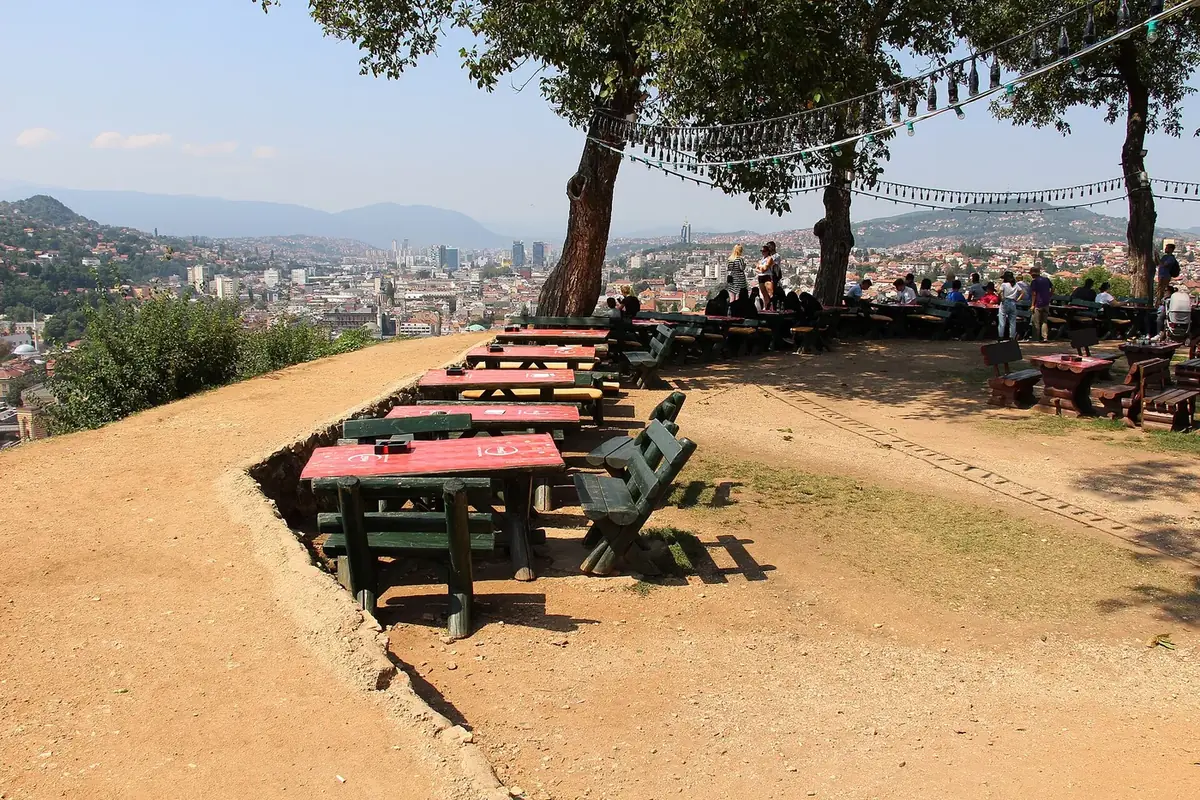
Best viewpoints in Sarajevo
The Yellow Fortress, the White Fortress and Trebević, plus cable car times and a sunset tip.
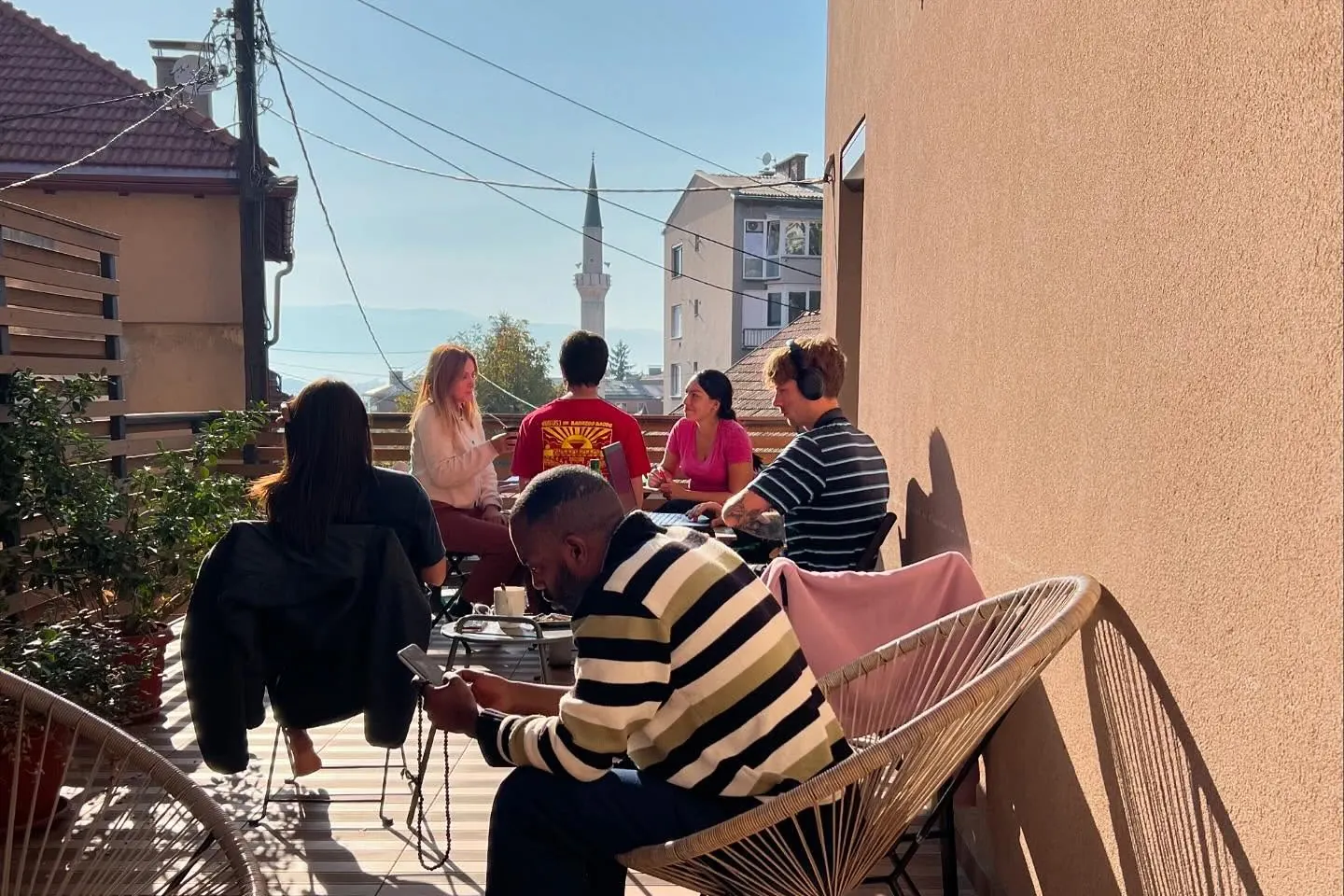
Come stay with us
Dorm beds from 33 KM a night, plus 2 KM city tax. No booking fees.
4.7 from 344 Google reviews
Questions? Chat with us on WhatsApp