
 KM
KM EUR
EUR USD
USD GBP
GBP AUD
AUD CAD
CAD NZD
NZD CHF
CHF SEK
SEK NOK
NOK DKK
DKK PLN
PLN CZK
CZK HUF
HUF RON
RON RSD
RSD TRY
TRY ILS
ILS AED
AED JPY
JPY KRW
KRW CNY
CNY SGD
SGD INR
INR BRL
BRL MXN
MXN ZAR
ZARThe Tunnel of Hope and Sarajevo's war museums

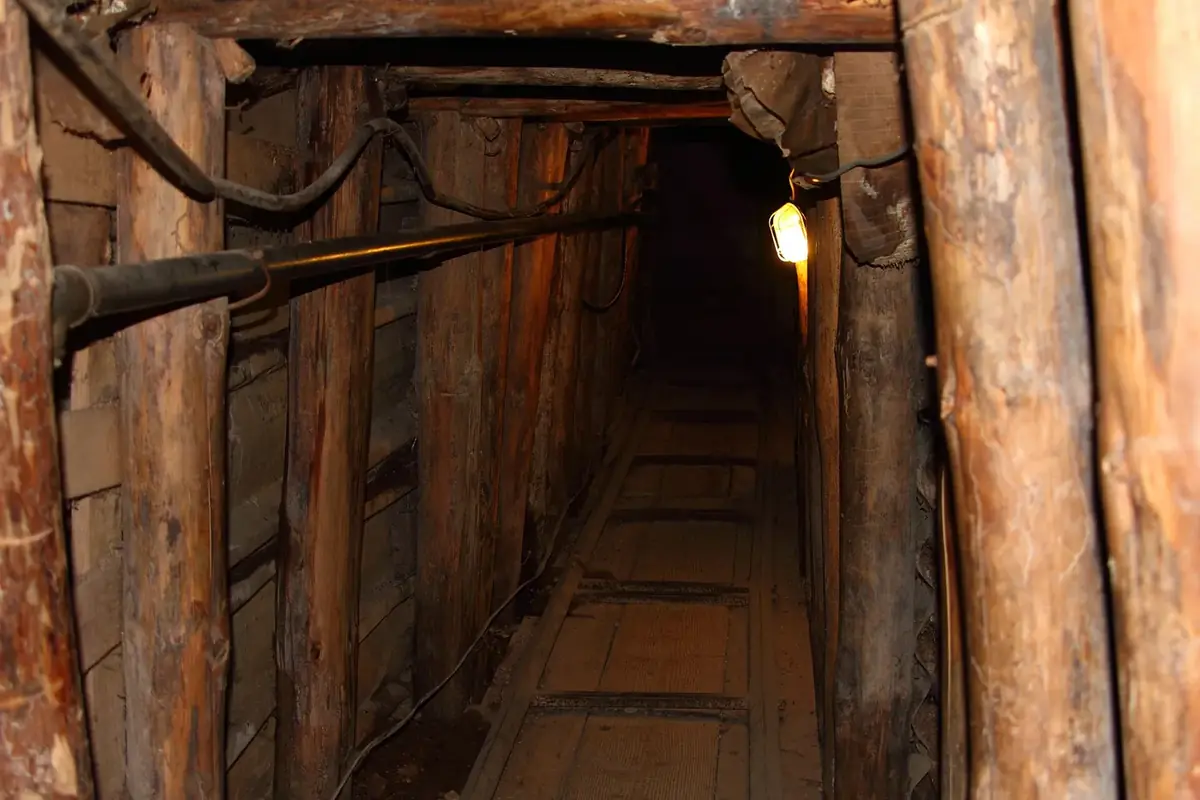
The Tunnel of Hope is a museum at the Butmir end of the tunnel dug under Sarajevo airport during the siege, which linked the surrounded city to the rest of the country. From April to October it opens at 8:30am. In the city centre, the War Childhood Museum and Gallery 11/07/95 tell other parts of the story of the 1992 to 1995 war.
This guide covers what each place is, the hours from their own websites, how to get to the Sarajevo tunnel, and the war tour we recommend. These are places of memory for people who still live here. Give yourself time, and go gently.
What is the Tunnel of Hope in Sarajevo?
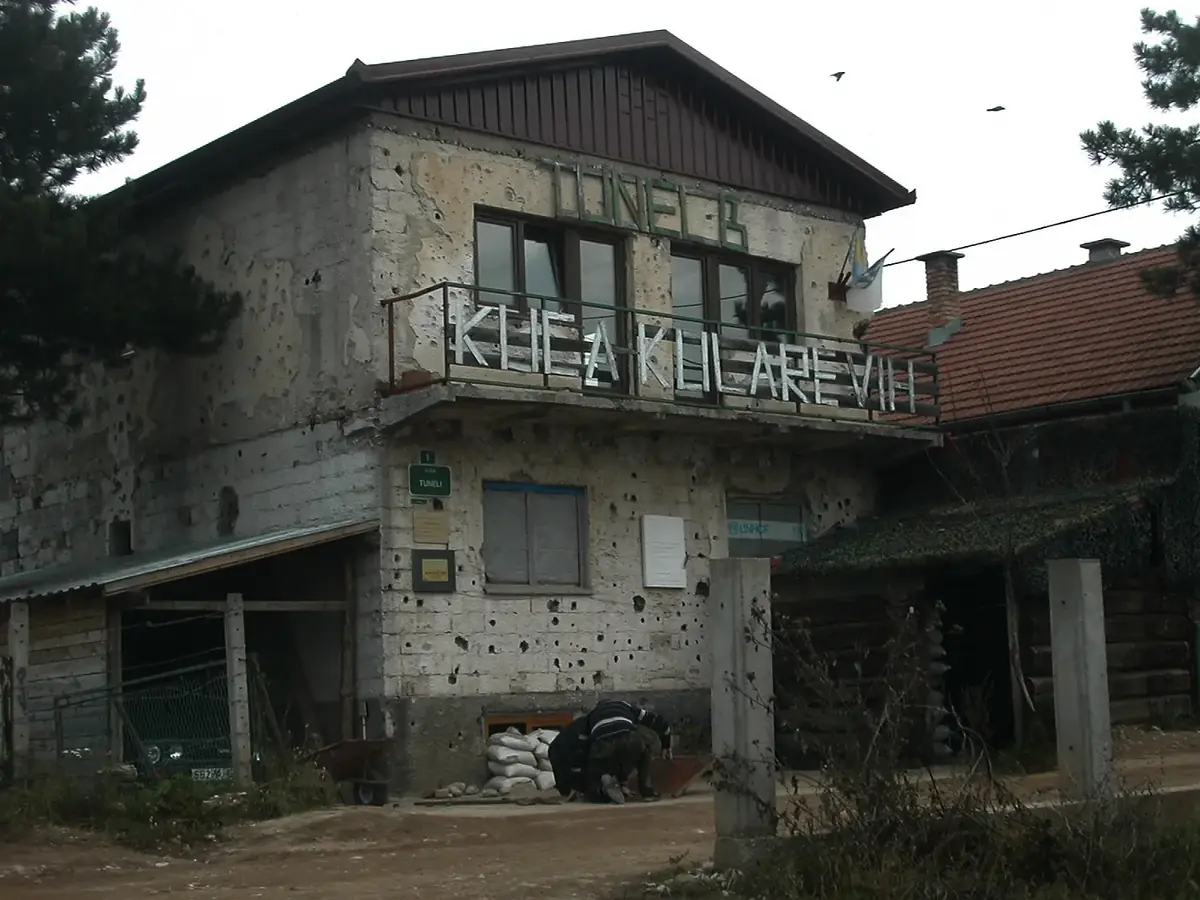
It is the wartime tunnel that ran under the runway of Sarajevo airport. Its official name is Tunel D-B, and it is widely known as Tunel spasa. It was built during the siege to connect the surrounded city with the rest of Bosnia and Herzegovina. The museum says the tunnel was in use from 1993 to 1995.
Today the Butmir side is open to visitors. Since April 2012 it has been run by the Memorial Centre Sarajevo (Memorijalni centar Sarajevo). Its own page describes the siege as the longest siege of a capital city in modern warfare.
What can you see at the Sarajevo tunnel museum?
You can walk into the original Butmir entrance and through 25 metres of the real tunnel. Next to it, another 100 metres of the original tunnel tube has been rebuilt to show what it looked like when it was in use.
The exhibition starts with the siege itself. A map of the siege is drawn over a map of Olympic Sarajevo from 1984. There are photos and videos of daily life inside the ring, everyday objects that people made to replace what they could not get, and food from humanitarian aid, like tins and lunch packs.
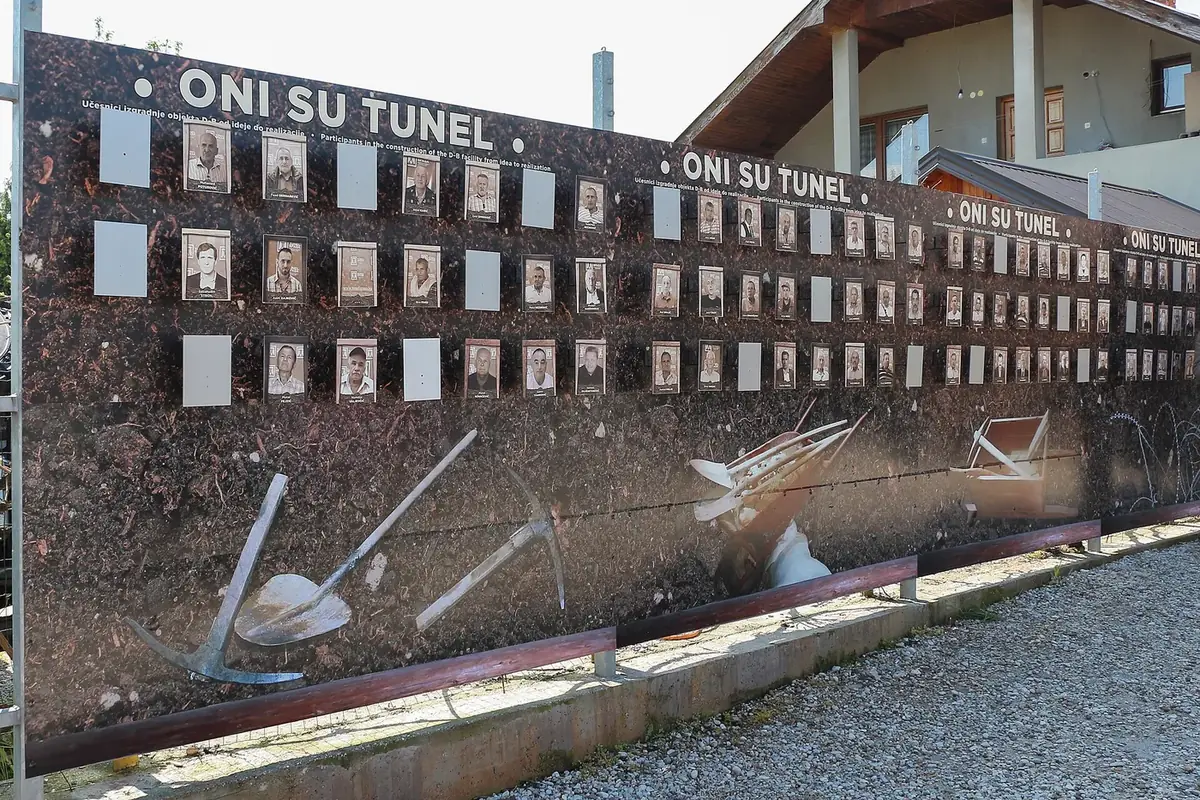
A second part shows how the tunnel was planned and built: the first drawings and orders, rare film from the building work, photos of the people who built it, and the tools they used.
When is the Tunnel of Hope open?
Hours are longer from April to October than in winter.
| Season | Hours |
|---|---|
| 1 April to 31 October | 8:30am to 5pm (last entry 4:30pm) |
| 1 November to 31 March | 9am to 4pm (last entry 3:30pm) |
Times can change, so check the Memorial Centre Sarajevo's tunnel page before you go.
Bring cash in KM. The museum says it does not take credit cards or foreign currency.
How do you get to the Tunnel of Hope?
The museum is at Tuneli 1 in Butmir, right next to Sarajevo airport. The easiest way is a guided tour, which brings you there and back. If you go on your own, Google Maps shows the routes, and the museum's page has a directions link.
Because it is so close to the airport, you could visit on the way to or from a flight. If you do, we can keep your bags after check-out. Our guide to getting between Sarajevo airport and the Old Town covers our airport shuttle.
Which Sarajevo war tour do we recommend?
The tour company we recommend is Meet Bosnia, a local agency based in Sarajevo. Their Fall of Yugoslavia, Sarajevo Siege Tour takes 4 hours. It leaves at 9am and 2pm.
Their page lists these stops:
- Žuta tabija, the Yellow Fortress
- Kovači Cemetery and the Memorial for Defenders
- Markale Market and the Memorial for Children Killed in Sarajevo
- The 1984 Olympic complex and stadium
- A drive along Sniper Alley
- The Tunnel of Hope
- The entity line, with a talk about the Dayton Peace Agreement
- Trebević and the Olympic bobsleigh track
The tour includes a licensed guide, transport and hotel pick-up and drop-off. The tunnel ticket is not included, so bring cash for it.
Meet Bosnia can pick you up in front of Hostel Kucha. To book, scan the code at our reception, or book on their site.
Meet Bosnia also runs a 10-hour Srebrenica tour from Sarajevo. If you want to see the Yellow Fortress at your own pace, it is in our list of viewpoints in Sarajevo.
What is the War Childhood Museum?
The War Childhood Museum tells the war through the eyes of people who were children at the time. It grew out of a crowd-sourced book called War Childhood, and its first permanent exhibition opened in January 2017. The exhibition shows 50 stories, each with a personal object, and the museum changes the stories every year.
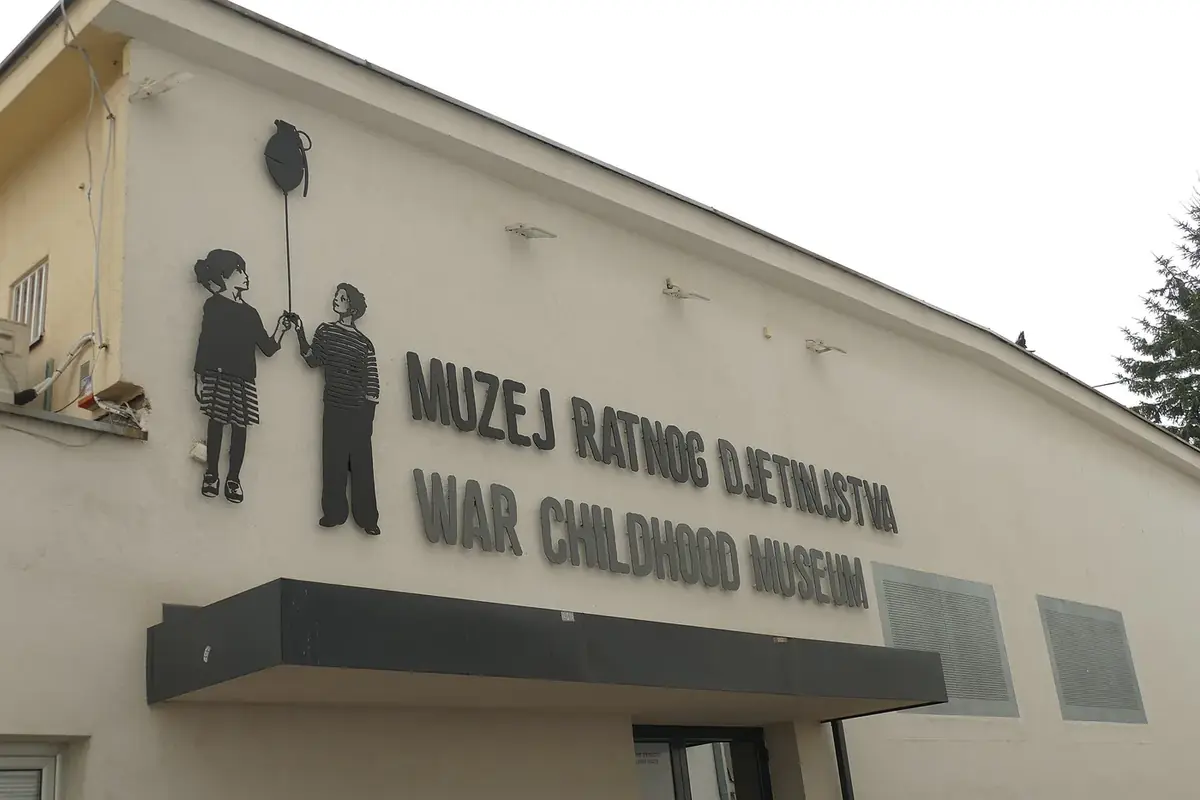
It is at Logavina 32 and open every day from 11am to 7pm, with last entry at 6:30pm. You can pay by card. The museum is closed on 1 January, 1 March, 1 May and 25 November.
Check the museum's visitor page before you go. When we checked, it said the lift for wheelchair users was out of service for now.
What is Gallery 11/07/95?
Gallery 11/07/95 is a memorial gallery about the Srebrenica genocide. It describes itself as the first memorial museum and gallery in Bosnia and Herzegovina, set up to keep the memory of Srebrenica and of the 8,372 people who lost their lives in the genocide.
It is on Trg fra Grge Martića 2, next to the Cathedral, and open every day from 9am to 9pm. Audio guides come in 12 languages, English included. From our door, the Cathedral is about 12 minutes' walk downhill.
Is there a Siege of Sarajevo museum?
Yes, there are several places that tell the story of the siege. The Tunnel of Hope gives part of its exhibition to the siege, and the War Childhood Museum shows how children lived through it. There is also a separate Siege of Sarajevo Museum in the centre, near the War Childhood Museum, and the Museum of Crimes Against Humanity and Genocide 1992 to 1995 is close by too.
We could not find official websites with hours for those last two, so check their Google Maps listings before you go. Here are the three we could confirm:
| Museum | What it is | Where | Hours |
|---|---|---|---|
| Tunnel of Hope (Tunel spasa) | The Butmir end of the wartime tunnel, with an exhibition on the siege | Tuneli 1, Butmir, by the airport | 8:30am to 5pm (April to October), 9am to 4pm (November to March) |
| War Childhood Museum | Objects and stories from people who were children in the war | Logavina 32 | Daily, 11am to 7pm |
| Gallery 11/07/95 | Memorial gallery about the Srebrenica genocide | Trg fra Grge Martića 2, next to the Cathedral | Daily, 9am to 9pm |
Times can change, so check each museum's own website before you go.
What are the Sarajevo Roses?
A Sarajevo Rose is a scar left in the concrete by a mortar shell, later filled with red resin. You will find them in pavements around the city. They are easy to walk past, so look down as you go.
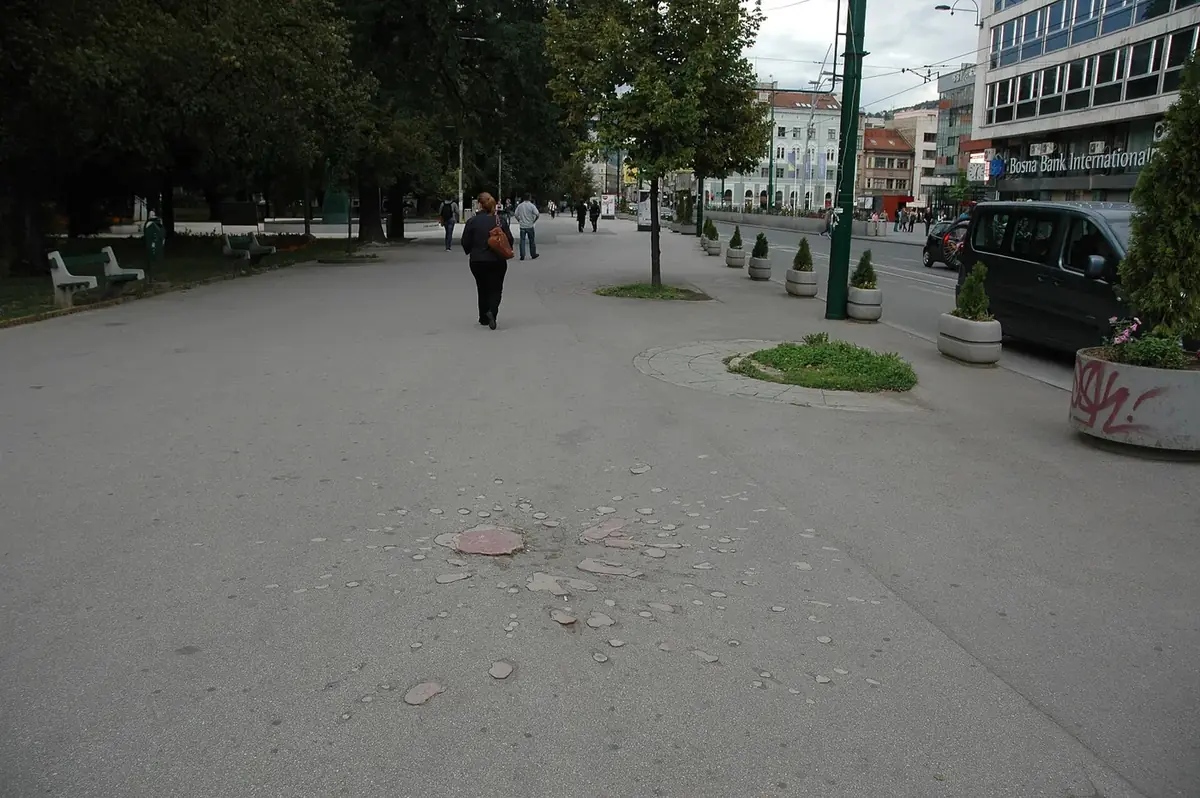
Please do not stand on one for a photo. They are memorials.
How should you plan a respectful visit?
Keep it simple. These places are memorials as much as museums, and many people in Sarajevo lived through what they show. Speak quietly, ask before you take a photo of anyone, and stay on the paths at cemeteries like Kovači.
Do not try to do everything in one day. The tunnel and the city museums are a lot to take in. It can help to pair the tunnel with something lighter, like a walk in the Old Town or a coffee. Our guide to things to do in Sarajevo has ideas. And if a tour takes you up Trebević, stay on the paths there too. Our Sarajevo safety guide explains why.
Planning your stay? See our rooms and book direct, with no booking fees.
Quick answers
- How long do you need at the tunnel? Plan for travel there and back, as it is out by the airport. A tour with the tunnel takes 4 hours.
- Is the War Childhood Museum open every day? Yes, 11am to 7pm, apart from a few public holidays.
- Do I need a guide? No. You can visit every place here on your own, but a guide adds the context.
More Sarajevo guides
Sarajevo guide
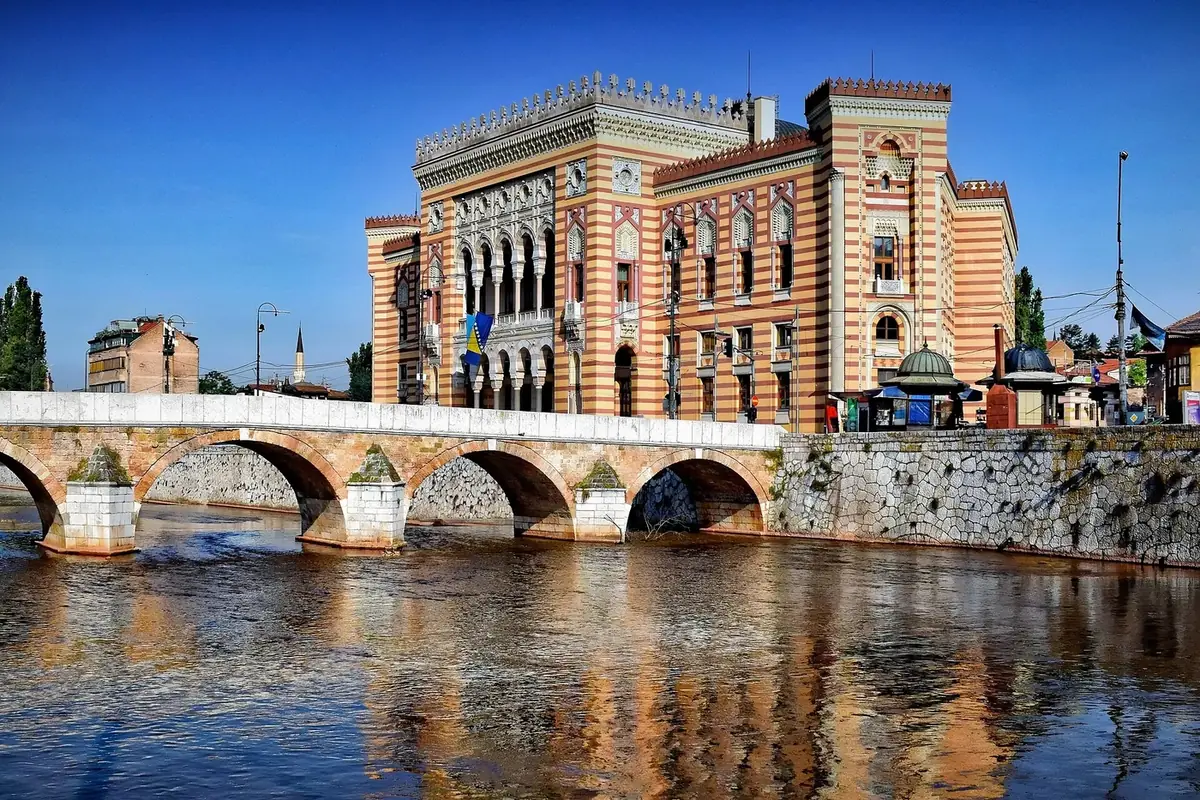
Things to do in Sarajevo
The Old Town, the views, the history and the free stuff, with opening hours.
Sarajevo guide
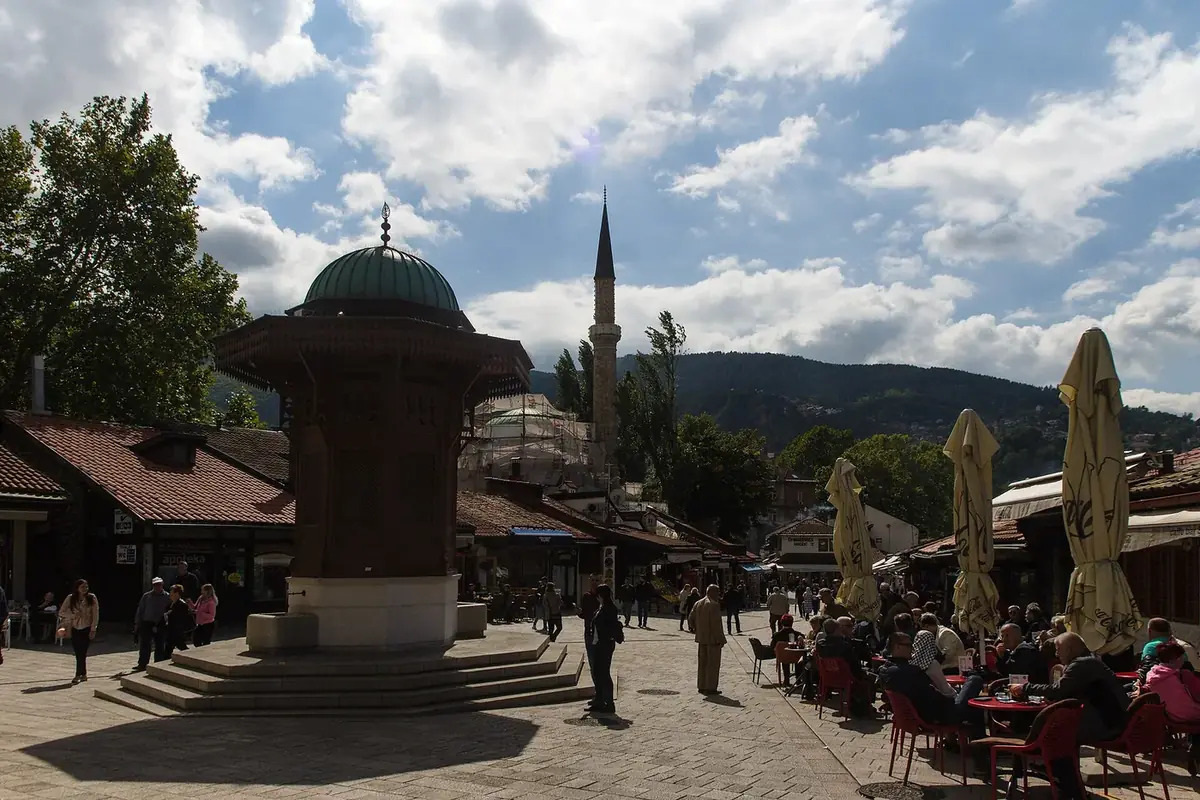
Baščaršija, Sarajevo's Old Town
The bazaar, the Latin Bridge, City Hall and the streets in between, with opening hours.
Sarajevo guide
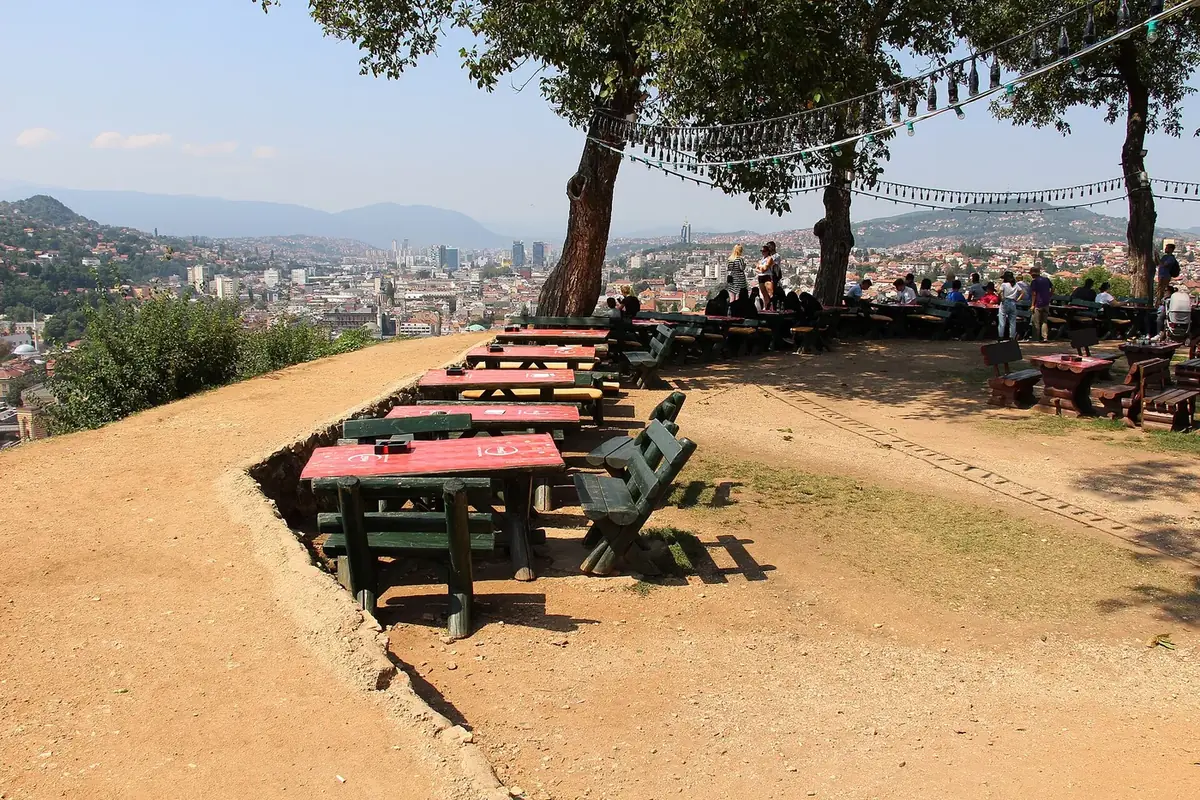
Best viewpoints in Sarajevo
The Yellow Fortress, the White Fortress and Trebević, plus cable car times and a sunset tip.
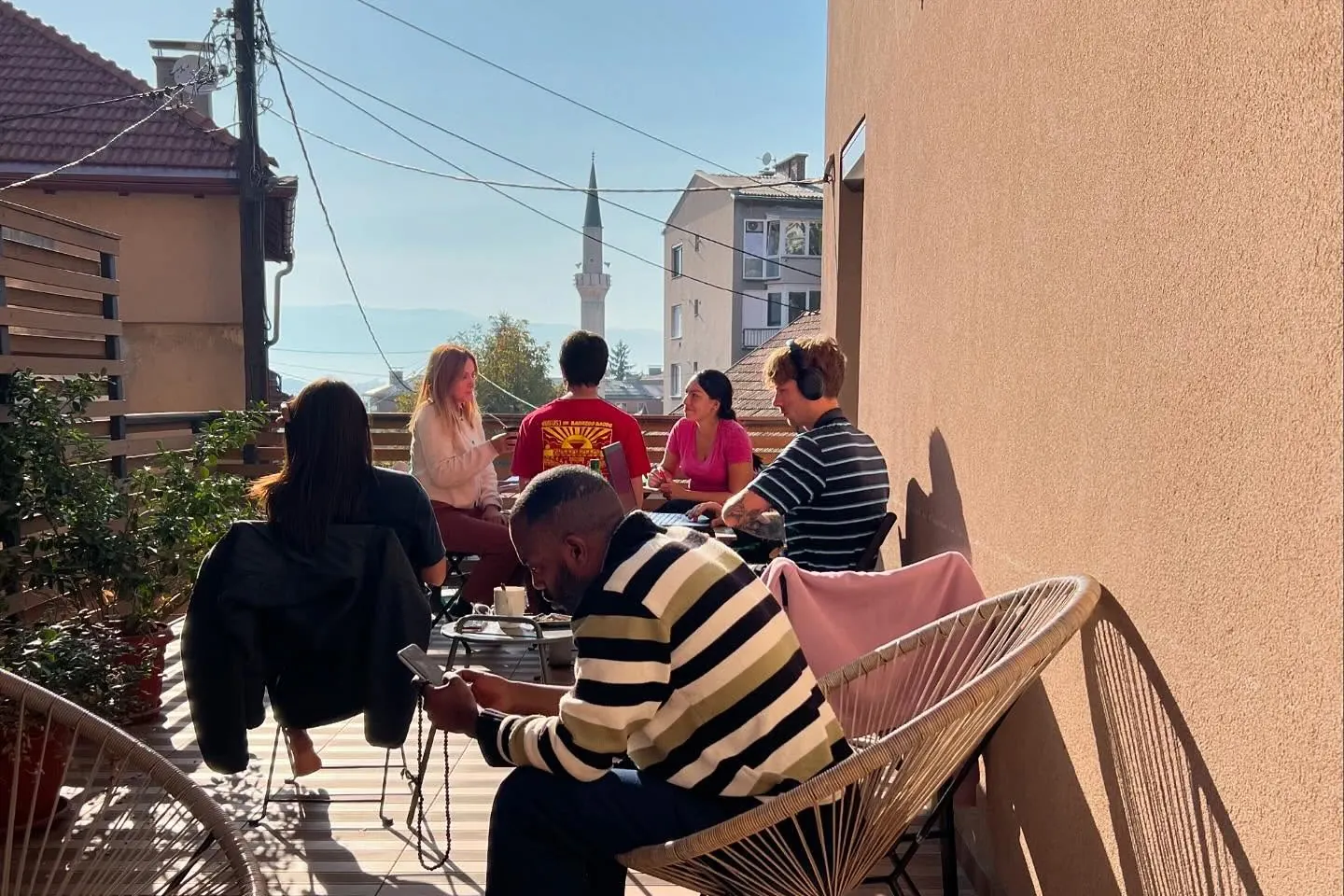
Come stay with us
Dorm beds from 33 KM a night, plus 2 KM city tax. No booking fees.
4.7 from 344 Google reviews
Questions? Chat with us on WhatsApp